Table of Contents
- Why This Guide Exists (And Why Most Tour Advice Is Biased)
- The 5 Most Important Questions to Ask Before Booking
- Understanding the Different Desert Tour Routes from Marrakech
- How to Compare Tour Durations (1 Day vs 2 vs 3 vs 4+ Days)
- Group Tour vs Private Tour — Which is Right for You?
- What a Legitimate Desert Tour Should Always Include
- Red Flags: How to Spot a Bad Desert Tour Operator
- How Pricing Really Works (And What’s Too Cheap to Trust)
- The Best Time of Year for a Desert Tour from Marrakech
- Why Travelers Choose Go Sahara Morocco
- Frequently Asked Questions
Why This Guide Exists (And Why Most Tour Advice Is Biased)
Let’s be honest about something most travel blogs won’t admit: the majority of “best desert tour” articles are written by people who have never taken the tour they’re recommending. They’re affiliate-driven listicles designed to earn commission, not inform travelers.
This guide is different.
At Go Sahara Morocco, we’ve operated desert tours since 2015. We’ve completed over 1,200 trips from Marrakech to the Sahara. We’ve seen firsthand what goes wrong on poorly planned tours — the overcrowded camps, the hidden fees, the guides who don’t speak functional English, the 50-seat coaches that can’t reach the best dune viewpoints.
We’re going to tell you exactly what to look for, what to avoid, and how to make a decision you’ll feel genuinely good about — even if you end up booking with someone else.
Because a bad desert tour isn’t just a wasted day. It’s a wasted journey to one of the most extraordinary places on earth.
“I almost booked a €99 ‘Sahara overnight’ I found on a random booking site. A friend who’d done it warned me off. I ended up with Go Sahara Morocco and it was the highlight of my entire trip through North Africa.” — James R., USA
The 5 Most Important Questions to Ask Before Booking
Before you compare prices or read a single review, ask yourself—and every operator you contact—these five questions. The answers will filter out 80% of bad choices immediately.
1. Who actually runs this tour?
Many tours listed on large aggregator platforms like Viator, GetYourGuide, or Airbnb Local subcontractors resell many tours listed on large aggregator platforms like Viator, GetYourGuide, or Airbnb. The platform takes a 20–30% commission, which either inflates your price or squeezes quality. The operator you speak to online may have never been to Merzouga.
What to look for: A company with a physical presence in Morocco, verifiable local guides, and direct booking options. Ask: “Is this your own tour or are you reselling?”
2. How many people will be in my group?
This single factor has more impact on your experience than any other. A group of 6 feels like a private adventure. A group of 22 feels like a school trip—queuing for camels, competing for the best camp spots, and being unable to linger at any stop.
What to look for: Maximum group size stated clearly upfront. Go Sahara Morocco caps all shared tours at 8 travelers.
3. Where exactly will I sleep in the desert?
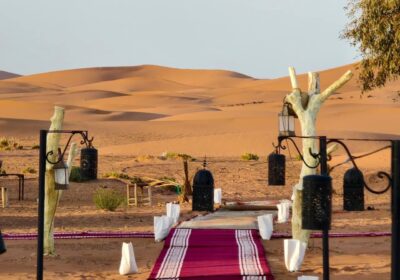
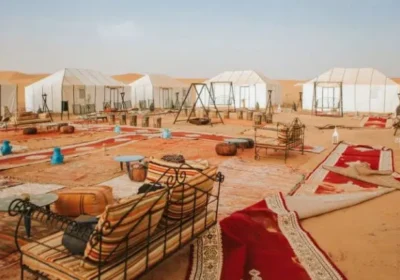
“Luxury camp” means completely unique things across operators. Some use the phrase to describe a row of thin-walled tents with shared pit toilets 500 meters from the dunes. Others provide properly furnished tents with real beds, en-suite bathrooms, and hot water.
What to look for: Ask for photos of the actual camp, not stock images. Ask specifically: “Does the camp have private bathrooms? Real beds? Hot showers?”
4. What does the price actually include?
This is where most travelers get surprised. A headline price of €120 for a “2-day Sahara tour” often excludes accommodation, most meals, entrance fees, camel trekking, and transport back. By the time you add everything, you’ve paid more than a properly priced €290 tour that included everything from the start.
What to look for: A clear, written inclusions list before you pay any deposit. Later in this guide, we will cover the essential inclusions.
5. Can I speak directly to my guide before departure?
A good operator will introduce you to your guide—or at least provide a name, biography, and WhatsApp number— before the tour begins. If an operator can’t tell you who your guide is, that’s a significant warning sign.
What to look for: Named, licensed guides with verifiable reviews. At Go Sahara Morocco, every guide profile is available on request, including language skills, specializations, and years of experience.
Understanding the Different Desert Tour Routes from Marrakech
Morocco has multiple desert destinations accessible from Marrakech, and the differences matter enormously. Here’s what you need to know about each:
Route 1: Marrakech → Merzouga (Erg Chebbi)
Distance from Marrakech: ~550 km Minimum recommended duration: 3 days (4 days ideal) Dune height: Up to 150 meters Best for: First-timers, photographers, travelers wanting the classic Sahara experience
Erg Chebbi near Merzouga is the destination most people picture when they imagine Morocco’s Sahara. These are the iconic orange dunes—vast, dramatic, and genuinely remote. The drive there is as spectacular as the destination: Tizi n’Tichka mountain pass, Ait Ben Haddou, Dades Valley, and Todra Gorge.
The trade-off is distance. Getting to Merzouga properly requires at least 4 days from Marrakech. Anyone selling you a “2-day Merzouga tour” is either rushing you through at an unsustainable pace or the math simply doesn’t add up.
👉 See Go Sahara Morocco’s full 4-day Merzouga itinerary
Route 2: Marrakech → Zagora (Erg Lehoudi)
Distance from Marrakech: ~350 km Minimum recommended duration: 2 days (3–4 days ideal) Dune height: ~50 meters Best for: Budget travelers, shorter itineraries, families with young children
Zagora is closer, more accessible, and genuinely beautiful — particularly the lush Draa Valley of palm oases that precedes it. The dunes at Erg Lehoudi are smaller than Merzouga but far less crowded, and the stargazing is equally spectacular.
If you have a hard constraint of 2–3 days and don’t want to rush, Zagora is the honest recommendation. Don’t let anyone sell you a 2-day Merzouga tour when Zagora would give you a far better experience in the same time.
Route 3: Marrakech → Merzouga → Fes (One-Way)
Distance: Marrakech to Fes via desert (~900 km) Minimum recommended duration: 4 days Best for: Travelers continuing north, those wanting maximum geographic variety
This is the grand traverse — crossing Morocco from its red imperial city in the south-west to its ancient capital in the north-east, with the Sahara in between. You don’t return to Marrakech; you end in Fes, ready to explore the medina, the tanneries, and potentially continue to Chefchaouen.
It’s the most geographically complete Morocco experience available in 4 days, and it’s significantly underbooked compared to the loop routes — meaning less competition for camp spots and more relaxed pacing.
👉 Explore the Marrakech to Fes 4-day route
How to Compare Tour Durations
Duration is the single biggest variable in desert tour quality. Here’s the completely honest breakdown:
| Duration | Reaches Merzouga? | Desert Night? | Key Stops | Verdict |
|---|---|---|---|---|
| 1 Day | ❌ No | ❌ No | Ait Ben Haddou only | Day trip, not a desert tour |
| 2 Days | ⚠️ Zagora only | ✅ Basic camp | Atlas + Zagora | Viable but rushed |
| 3 Days | ✅ Yes | ✅ Yes | Atlas + Merzouga | Good, tight pace |
| 4 Days | ✅ Yes | ✅ Luxury camp | Everything | ✅ Recommended |
| 5–7 Days | ✅ Yes | ✅ Multiple nights | Everything + more | Ideal if time allows |
The sweet spot for most travelers is unambiguously 4 days. It’s the minimum duration that reaches Merzouga without sacrificing the quality stops in between — Todra Gorge, the Rose Valley, Rissani market — and still leaves time for a proper sunrise experience in the dunes before heading back.
👉 Compare all 4-day tour options from Marrakech
Group Tour vs Private Tour — Which is Right for You?
This is the second most important decision after duration. Neither option is universally better — it depends entirely on your travel style, budget, and priorities.
Shared Group Tours (Max 8 People)
Best for: Solo travelers, budget-conscious couples, people who enjoy meeting fellow travelers
Advantages:
- Significantly lower cost (starting from €290 per person with Go Sahara Morocco)
- Built-in social dynamic—many lasting friendships are made on these tours
- Fixed schedule removes all planning decisions from you
- Same quality vehicle, guide, and camps as private tours
Disadvantages:
- Fixed departure times and stop durations
- Group dynamics can vary—you won’t know your travel companions in advance
- Less flexibility to linger at a spot you love or skip one you don’t
Private Tours (2–6 People)
Best for: Couples, families, photography enthusiasts, travelers with specific dietary or mobility needs
Advantages:
- Complete schedule flexibility — stop as long as you want, anywhere
- Dedicated guide focused entirely on your group
- Ability to customize routes, add stops, or adjust the pace mid-tour
- More intimate experience, especially at camp and during camel treks
Disadvantages:
- Higher cost — from €490 per person for 2 travelers
- No built-in social element if you’re traveling solo
Go Sahara Morocco’s honest recommendation: If you’re traveling as a couple or family and the budget allows, private is worth it. If you’re solo or on a tighter budget, our small-group tours (max 8) feel genuinely private compared to the 20–40 person coaches used by most operators.
What a Legitimate Desert Tour Should Always Include
Use this as your non-negotiable checklist. Any operator unwilling to confirm these items in writing before you pay a deposit should be avoided:
✅ Must always be included:
- Private air-conditioned vehicle (not shared with other tour groups)
- Licensed, English-speaking guide for the entire duration
- All accommodation—riads, guesthouses, and desert camps
- Daily breakfast and dinner (camp dinner is essential — it’s part of the experience)
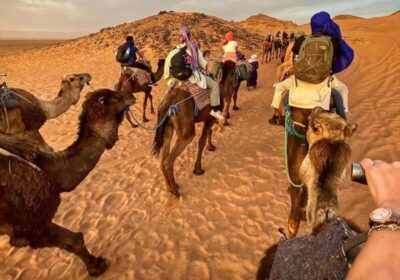
- Camel trek into the dunes (minimum 45 minutes — anything less is a photo opportunity, not a trek)
- Return transport to your Marrakech hotel or riad
⚠️ Commonly excluded — ask explicitly:
- Lunches (typically €8–€12 per meal at local restaurants)
- Entrance fees—Ait Ben Haddou (€5), Todra Gorge (free)
- Drinks beyond breakfast and dinner
- Tips for guides (appreciated but not obligatory)
- Travel insurance (strongly recommended — purchase independently)
🚩 Red flags in inclusions lists:
- “Camp accommodation” with no description of what the camp actually is
- “Camel experience” rather than “camel trek” (this often means a 5-minute photo on a camel)
- No mention of which meals are included
- “English-speaking driver” rather than “licensed English-speaking guide” — a significant difference
Red Flags: How to Spot a Bad Desert Tour Operator
After a decade in this industry, the Go Sahara Morocco team has seen every iteration of the bad operator playbook. Here’s what to watch for:
The Price Is Suspiciously Low
A legitimate 4-day desert tour from Marrakech—with proper accommodation, a licensed guide, all-inclusive meals, and a quality camp—cannot be delivered for less than €250 per person in a small group. If you see prices of €120–€180 for a “4-day Sahara tour,” something is being cut. Usually it’s the camp quality, the guide certification, or the group is 30+ people.
No Physical Address or Verifiable Presence in Morocco
Legitimate Morocco-based operators have a physical office, a Moroccan phone number, and verifiable reviews on Google Maps tied to a real address. If an operator only exists on Booking.com or a WordPress site with no address listed, proceed with significant caution.
Reviews Are Generic or Suspiciously Perfect
A 5.0/5 rating on 12 reviews tells you much less than a 4.9/5 on 340 reviews. Read the negative reviews carefully — how does the operator respond? Defensive, dismissive responses to criticism are a strong signal of how they treat customers when things go wrong.
Pressure to Pay in Full Upfront
Legitimate operators ask for a small deposit (typically €50–€100) to secure your booking, with the balance paid on arrival in Morocco. Any operator demanding full payment upfront via bank transfer or cryptocurrency should be avoided entirely.
Vague Answers to Specific Questions
Ask: “What is the name and certification number of my guide?” A good operator answers immediately. A bad one deflects with “Don’t worry, all our guides are very experienced.”
How Pricing Really Works (And What’s Too Cheap to Trust)
Morocco desert tour pricing is driven by four main variables. Understanding them helps you evaluate any quote you receive:
1. Group Size
The single biggest price driver. A private tour for two people costs significantly more per person than a shared group of eight—not because the quality is higher but because the fixed costs (vehicle, guide, fuel, camp) are divided among fewer people.
2. Camp Quality
There is a vast spectrum between a basic Bedouin tent with a shared outdoor toilet and a properly equipped luxury camp with private en-suite tents, real beds, and hot water. The price difference is typically €60–€100 per person per night. It’s always worth paying for the upgrade.
3. Season
High season (March–May, September–October) commands premium prices due to demand. Low season (November–February) offers the best rates — sometimes 15–20% lower — with the trade-off of cold desert nights.
4. Route Length and Inclusions
A 4-day tour naturally costs more than a 2-day tour. A tour including Todra Gorge, Rissani, and sandboarding costs more than one that drives straight to the dunes and back.
Go Sahara Morocco Pricing Reference
| Tour Type | Group Size | Price Per Person |
|---|---|---|
| Small Group (shared) | 6–8 travelers | From €290 |
| Private Tour | 2–4 travelers | From €490 |
| Luxury Camp Upgrade | Any tour | +€80 per person |
| Zagora Route (2–3 days) | 6–8 travelers | From €220 |
👉 View full pricing and availability for all tours from Marrakech
The Best Time of Year for a Desert Tour from Marrakech
Timing affects everything — temperature, crowd levels, photography quality, and price. Here is the completely honest seasonal breakdown:
October & November — ⭐ Excellent
Daytime temperatures of 20–26°C and cool and comfortable nights of 10–15°C. The summer crowds have thinned, the light is golden and spectacular for photography, and the desert feels genuinely serene. This is our most popular booking window. Book 4–6 weeks in advance.
March & April — ⭐ Excellent
Similar temperatures to October–November, with the added spectacle of wildflowers in the Atlas foothills and the rose harvest beginning in the Dades Valley (April). The most photogenic time of year. Again, book early.
December, January & February — ✅ Very Good
Fewer tourists than any other period, lowest prices, and extraordinary stargazing due to the cold, dry air. The trade-off is cold nights — desert temperatures can drop to 0–5°C after dark. Our camps provide blankets and quilts, but pack warm layers. Entirely manageable and genuinely beautiful.
May — ✅ Good
Warming up but not yet oppressively hot. Ideal if you missed the spring window. Expect 28–32°C in the desert by mid-May.
June, July & August — ⚠️ With Caution
Desert temperatures reach 38–42°C during the day. Camel treks are moved to 5:00am (genuinely magical, if you can wake up) and all outdoor activities happen at dawn and dusk. Prices are at their lowest. Recommended only for travelers who are genuinely heat-tolerant and are specifically seeking the low-season experience.
September — ✅ Good
Temperatures beginning to moderate from the summer peak. By late September, conditions are excellent. An underrated month with fewer crowds than October.
Why Travelers Choose Go Sahara Morocco
We’ve spent most of this guide telling you what to look for in any operator. Now we’ll tell you specifically why Go Sahara Morocco consistently earns the reviews and repeat bookings we do.
We are genuinely local. Our guides grew up in Berber villages along the routes you’ll travel. When your guide describes the history of a particular kasbah or introduces you to an artisan in Rissani, it comes from a real personal connection—not a tour script.
We operate our own camps. We don’t outsource your dessert night to a third party and hope for the best. Our Merzouga camp partners are relationships built over years, with quality standards we inspect personally and regularly.
We keep groups small by principle, not by accident. Maximum 8 travelers per shared departure. This is a business decision that costs us revenue—a larger group is more profitable—but produces a fundamentally better experience for every traveler.
We have nothing to hide on pricing. Our inclusions list is complete and specific. We have never added a surprise charge to a tour. The price quoted is the price paid, with only lunches and the Ait Ben Haddou entrance fee (€5) as noted extras.
Our reviews are real. Rated 4.9/5 across 340+ verified Google reviews. We don’t manufacture reviews, we don’t offer discounts for positive feedback, and we respond personally to every piece of criticism we receive.
👉 Browse all Go Sahara Morocco tours from Marrakech 👉 Book the 4-day Sahara desert trip directly
Frequently Asked Questions
What is the best desert tour from Marrakech for first-timers? For a first visit, the classic 4-day Marrakech to Merzouga tour is the definitive recommendation. It covers the most iconic landscapes—Atlas Mountains, Ait Ben Haddou, Todra Gorge, and Erg Chebbi dunes—at a pace that feels unhurried. Go Sahara Morocco‘s shared group departure, is the best-value entry point, starting from €290 per person.
Is it better to book a Morocco desert tour in advance or on arrival in Marrakech? Book in advance, especially for travel between March and May and September and November. Quality small-group tours with reputable operators fill up weeks ahead during peak season. Booking on arrival in Marrakech often means accepting whatever last-minute spots remain — usually on larger, lower-quality group departures. A €50 deposit secures your spot with Go Sahara Morocco with free cancellation up to 7 days before departure.
Can I customize a desert tour itinerary from Marrakech? Yes, with a private tour. Go Sahara Morocco offers fully customizable private itineraries for groups of 2–6 people. Common customizations include adding a second night in the desert, incorporating a Saharan village visit, adjusting driving hours for photographers who want maximum golden-hour time, or building in an extra day in Fes at the end.
Are Morocco desert tours suitable for older travelers or those with limited mobility? Yes, with the right planning. The driving portions are entirely passive. Camel treks involve mounting and dismounting a kneeling camel, which some travelers with hip or knee issues find challenging — in which case we offer a 4×4 dune ride as a comfortable alternative. All accommodations include proper beds. Let us know any mobility considerations when booking and we’ll plan accordingly.
What’s the difference between a Sahara tour and a desert tour in Morocco? In practical terms, nothing — both terms refer to tours that reach the Saharan dune fields of southern Morocco, primarily Erg Chebbi (Merzouga) or Erg Lehoudi (Zagora). Some operators use “desert tour” to describe shorter trips that reach the pre-Saharan landscapes of the Draa or Dades valleys without reaching actual sand dunes — always confirm the specific destination before booking.
How far in advance should I book a desert tour from Marrakech? For peak season travel (March–May, September–November), we recommend booking 3–5 weeks in advance. For low season, 1–2 weeks is usually sufficient. For private tours at any time of year, 2 weeks minimum allows us to confirm all accommodations and guide assignments properly.
Is tipping expected on Moroccan desert tours? Tipping is appreciated but never obligatory. The Moroccan travel industry norm for a well-executed multi-day tour is approximately €5–€10 per traveler per day for the guide, and €3–€5 per night for camp staff. This is entirely at your discretion and should reflect your experience.
The Bottom Line
Choosing the best desert tour from Marrakech comes down to five things: the right duration, an honest operator, a quality camp, a small group, and clear pricing. Every other variable — the specific stops, the exact route, the upgrade options — follows from getting those five things right.
If you’ve read this far, you’re already better equipped than 90% of travelers who book a Morocco desert tour. You know the questions to ask, the red flags to avoid, and the standards to insist on.
Go Sahara Morocco exists to deliver exactly what this guide describes — nothing more, nothing less. We’d be proud to earn your booking. But more than that, we want you to arrive in the Sahara having made the right choice, whoever you book with.
👉 Explore all desert tours from Marrakech 👉 View the full 4-day tour from Marrakech 👉 Book the 4-day Sahara trip directly
Written by the Go Sahara Morocco team — Berber desert guides and tour specialists based in Marrakech and Merzouga, Morocco. Operating since 2015 with 1,200+ completed tours and a 4.9/5 rating on TripAdvisor.