Login to use
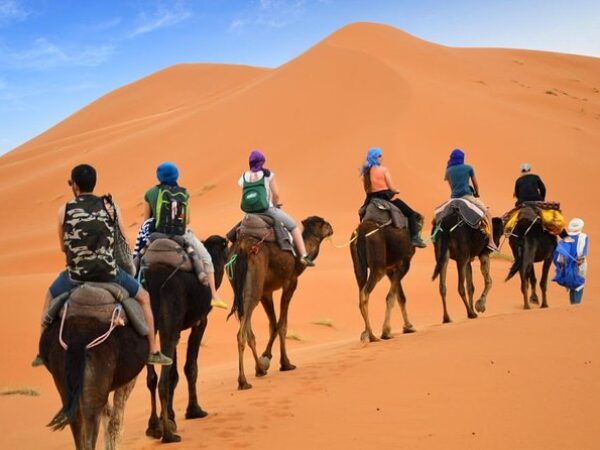
3-Day Sahara Desert Tour from Fes to Marrakech via Merzouga
Location
Duration
Embark on a breathtaking 3-day journey through Morocco’s...

Discover the Magic of Morocco’s Sahara Desert on This Immersive Four-Day Adventure
Picture yourself standing atop a towering sand dune as the Sahara Desert stretches endlessly before you, its golden waves glowing in the light of a setting sun. This 4 days desert tour from Marrakech to Merzouga is crafted for travelers who want to truly immerse themselves in Morocco’s most iconic landscape rather than simply check it off a list. Over four unforgettable days, you’ll journey from Marrakech’s bustling streets through the dramatic High Atlas Mountains, explore ancient kasbahs that once guarded vital trade routes, walk through breathtaking gorges carved by millennia of flowing water, and spend two full nights in the heart of the Sahara Desert.
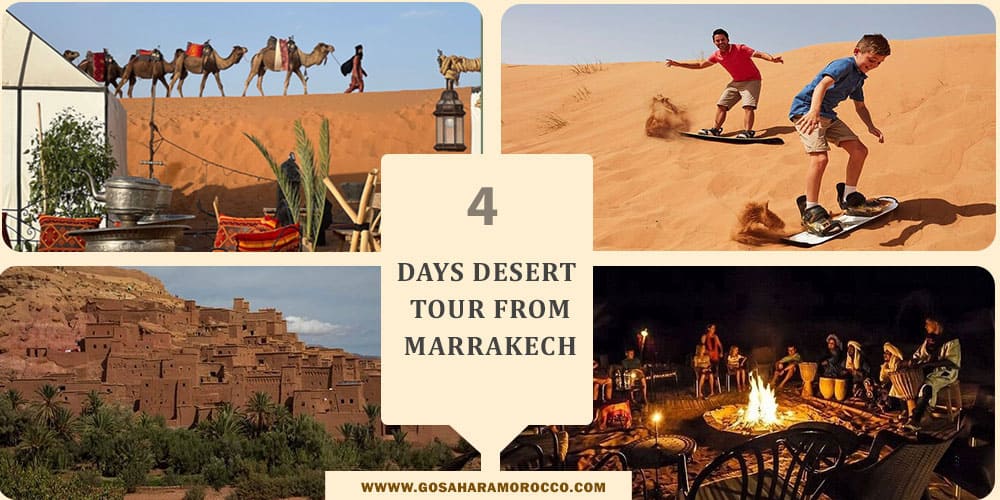
This carefully designed itinerary has become one of Morocco’s most beloved desert experiences, and the reasons extend far beyond simply “seeing the Sahara”:
Two Full Nights in the Desert: While most tours offer just one night near the dunes, this extended experience gives you two nights in the Merzouga region. You’ll have time to truly disconnect from modern life, explore the desert’s hidden corners, and experience both the tranquility of the dunes at different times of day and the warmth of prolonged Berber hospitality.
Flexible Desert Activities: The extra time allows you to choose from activities like quad biking across the dunes or sandboarding to surf on the dune; visiting Khamlia village to experience Gnawa music performed by descendants of sub-Saharan traders, exploring seasonal desert lakes that attract flamingos, meeting nomadic families in their traditional tents, or simply spending contemplative hours watching light and shadow play across the sand.
Round-Trip Convenience: This tour returns you to Marrakech, making it perfect for travelers based in the Red City or those with flights departing from Marrakech. You’ll experience different routes going and returning, maximizing landscape diversity without the logistics of one-way travel.
Optimal Pacing Without Rush: Four days provides the breathing room that transforms a tour into an experience. You’re not constantly packing and unpacking, rushing from one location to the next, or spending entire days trapped in a vehicle. There’s time to linger at places that captivate you, enjoy leisurely meals, and have spontaneous interactions with locals.
Dramatic Landscape Progression: Watch Morocco transform day by day—from the red earth and snow-capped peaks of the High Atlas to the rose-colored cliffs of Dades Valley, the towering walls of Todra Gorge, the black volcanic desert approaching Merzouga, and finally the golden dunes of Erg Chebbi. Each day brings landscapes so different you’ll barely believe you’re in the same country.
Professional Local Guides: Your driver knows these routes intimately—not from a GPS but from years of experience. They know which viewpoints capture the best light, which family-run restaurants serve the most delicious tagine, when to visit cooperatives to see production in action, and how to navigate the social nuances that turn encounters with locals into meaningful exchanges.
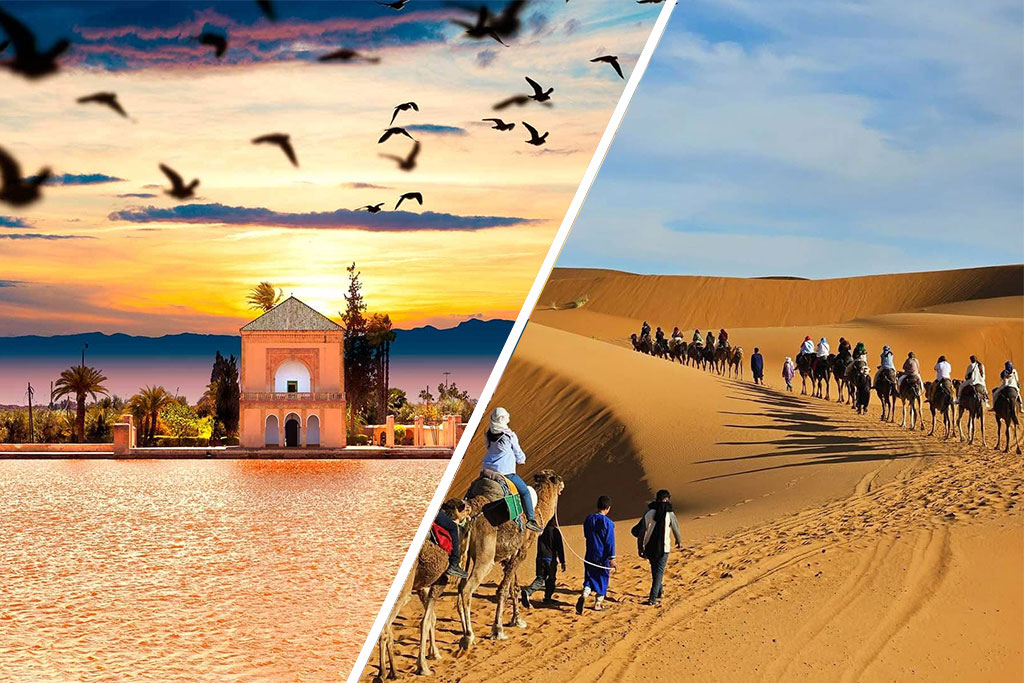
our desert adventure begins as dawn breaks over Marrakech, painting the Koutoubia Mosque’s minaret in soft gold light. After hotel pickup, you’ll leave the city’s energy behind, heading southeast toward the High Atlas Mountains that form Morocco’s dramatic spine. The road climbs steadily through landscapes that shift from cultivated valleys where farmers tend small plots using methods unchanged for generations to increasingly barren slopes where Berber villages appear as clusters of earth-colored houses barely distinguishable from the mountainside.
The ascent to Tizi n’Tichka Pass—at 2,260 meters, the highest paved crossing in North Africa—takes you through dozens of serpentine curves. Each switchback reveals new perspectives: behind you, the plains stretching toward Marrakech; ahead, the peaks of the High Atlas extending toward the horizon in serrated ridges. Roadside stalls sell fossils, minerals, and woven goods, while vendors offer fresh-pressed orange juice and roasted almonds.
At the pass summit, step out into mountain air noticeably thinner and cooler than Marrakech’s urban warmth. The panoramic views explain why these mountains served as such an effective barrier between northern and southern Morocco for centuries. Photograph the dramatic peaks, then begin the southern descent where the landscape transforms with startling speed—greenery gives way to red earth, and the climate shifts from Mediterranean influence to pre-Saharan aridity.
Your first major stop is Ait Ben Haddou, one of Morocco’s most extraordinary sights and a UNESCO World Heritage Site that’s appeared in over twenty major films. This fortified village—called a ksar in Arabic—rises from the valley floor like a sculpture carved from the earth itself. Towers, crenellated walls, and geometric decorations built entirely from rammed earth create architecture that’s remained fundamentally unchanged since the 17th century.
Cross the seasonal Ounila River (via stepping stones or a footbridge depending on water levels) to enter the ksar. A local guide leads you through shadowy passages between high walls, explaining construction techniques that use mud, straw, and wooden beams to create structures that endure decades with proper maintenance. Climb the steep path to the hillside granary at the summit, passing through rooms where families once stored grain against lean times. From the top, views extend across the valley to modern Ait Ben Haddou village on the opposite bank, backed by the Atlas Mountains you just crossed.
Continue to Ouarzazate, the “Gateway to the Sahara” and Morocco’s film industry hub. The city’s clear light, dramatic landscapes, and existing infrastructure have attracted productions from “Lawrence of Arabia” to “Gladiator,” “The Mummy,” and “Game of Thrones.” Visit Taourirt Kasbah, the sprawling former palace of the Glaoui family who controlled southern Morocco during the French protectorate. Wander through dozens of rooms decorated with painted cedar ceilings, carved plaster, and wrought-iron window grilles, imagining the wealth and power concentrated in this desert outpost.
The afternoon journey follows the Road of a Thousand Kasbahs through the Skoura palm oasis, where ancient fortified homes emerge from seas of date palms. These aren’t tourist reconstructions—many are still inhabited by families whose ancestors built them centuries ago. Stop at a traditional rose cooperative (especially worthwhile in May during the rose harvest festival) where women demonstrate the distillation process that transforms Rosa damascena petals into precious rose water and essential oil used in cosmetics, perfumes, and traditional medicines.
Pass through the Valley of Roses, where every May the fields explode in pink blooms and the air carries their intoxicating fragrance. Even outside rose season, the valley’s beauty impresses—fields terraced up valley walls, kasbahs perched on strategic heights, and the sense of driving through landscapes where human presence and natural beauty have achieved rare harmony.
Arrive in Dades Valley by late afternoon as the sun begins its descent, igniting the valley’s famous rock formations in shades of amber and rose. The Monkey Fingers rock formations—bizarrely eroded limestone columns that resemble skeletal hands reaching from the earth—create one of Morocco’s most distinctive geological features. Your accommodation overlooks the valley, offering sunset views that justify every kilometer of the journey.
Evening brings the pleasure of traditional Moroccan hospitality—mint tea on a terrace as the valley falls into shadow, a home-cooked tagine that tastes infinitely better than restaurant versions, and the profound quiet that settles over rural Morocco after sunset.
Meals included: Breakfast, Dinner
Accommodation: Comfortable hotel or traditional kasbah guesthouse in Dades Valley with panoramic views
Driving distance: Approximately 330 kilometers (6-7 hours including stops and visits)
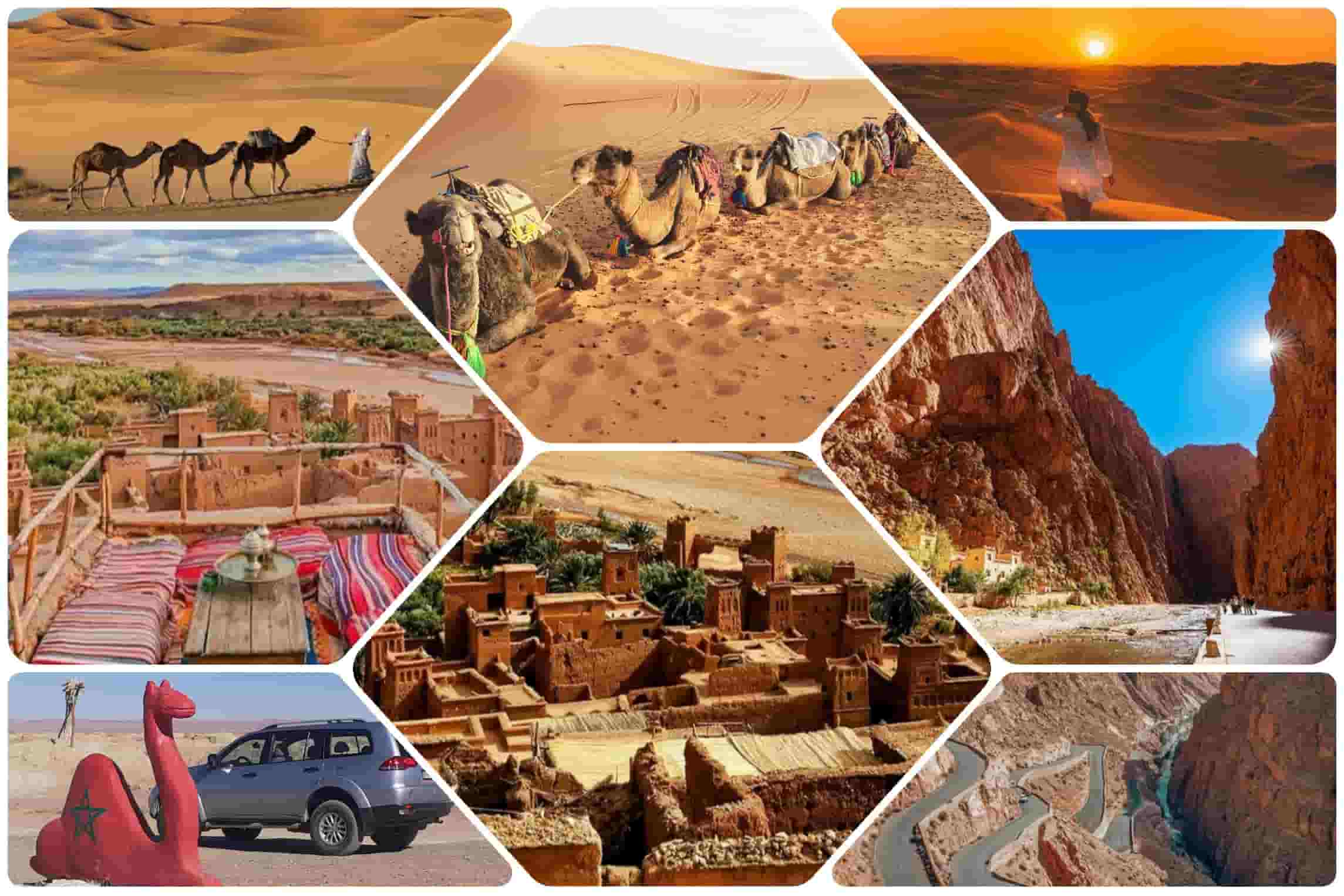
Wake to the Dades Valley transformed by early morning light—shadows pool in the valley depths while the first rays illuminate the upper cliffs, creating contrast that photographers dream about. After breakfast, your journey continues through the valley, climbing through the famous Dades Gorges. The road negotiates a series of dramatic hairpin bends locally called “serpent curves,” each switchback revealing the engineering achievement of carving this route through towering limestone walls.
The higher sections of the gorges narrow dramatically, with walls rising vertically on both sides and the river rushing through rocks below. Stop at viewpoints where the gorge’s full majesty becomes apparent—layers of sedimentary rock record millions of years of geological history, while erosion has carved the stone into formations that resemble medieval castles and organic sculptures.
Continue to Todra Gorge, widely considered Morocco’s most spectacular canyon. The approach builds anticipation—the valley gradually narrows, walls grow taller, and the sense of entering a natural cathedral intensifies. Then you reach the final 600-meter section where the gorge achieves its most dramatic dimensions: walls rise 160 meters vertically while the passage narrows to barely 10 meters across at the base. Sunlight reaches the gorge floor only at midday, and even then, the light has a filtered, cathedral-like quality.
Park and walk into the gorge’s narrowest section. The experience is visceral—the temperature drops noticeably, the sound of the Todra River echoes off the walls, and the sheer scale dwarfs human presence. Look up to see rock climbers suspended impossibly high on the limestone faces, their ropes barely visible against the stone. The gorge has become one of Morocco’s premier climbing destinations, with routes ranging from beginner-friendly to extremely challenging.
Take your time here. Walk as far into the gorge as the path allows, photograph the interplay of light and shadow, and simply sit on riverside rocks contemplating geological time. A small stream of cold, clear water runs year-round (swollen with snowmelt in spring), and local women sometimes wash carpets in the traditional way, spreading them on rocks to dry in the sun.
Leaving Todra, the landscape transforms again as you descend toward true desert terrain. Pass through Tinejdad and Erfoud, the latter known as Morocco’s “fossil city.” Workshops here have transformed fossil extraction into an art form—350-million-year-old trilobites, ammonites, and orthoceras from when this entire region lay beneath the Devonian Sea are cut, polished, and transformed into decorative objects. Visit a workshop to see artisans at work and understand the geological heritage beneath your feet.
The landscape becomes increasingly alien as you approach Merzouga. Black volcanic desert alternates with beige sand, distant mountains shimmer in heat mirages, and the emptiness feels almost lunar. Then suddenly, they appear on the horizon: the Erg Chebbi dunes, Morocco’s most spectacular sand sea and the reason you’ve traveled these hundreds of kilometers.
Erg Chebbi’s dunes stretch 28 kilometers north to south and rise up to 150 meters high—genuine Saharan sand mountains sculpted by wind into curves and ridges that seem to flow like frozen waves. The sand’s distinctive golden-orange color, particularly intense at sunrise and sunset, comes from iron oxide content that gives these dunes their unique character.
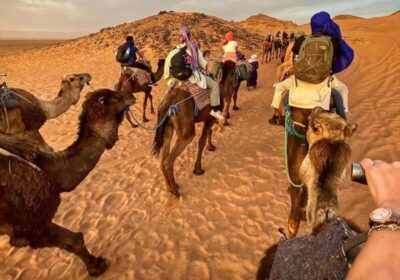
Arrive at your hotel in Merzouga village on the edge of the erg in late afternoon. You have time to freshen up and rest before the day’s highlight: your camel trek into the desert. As the sun begins its descent, climb onto your waiting camel. If you’ve never ridden a camel, the initial moment when the animal stands up—back legs first, then front—requires holding on firmly and leaning back, but within minutes you’ll find the swaying rhythm surprisingly comfortable.
Your camel caravan walks into the erg single file, following paths known to your guides but invisible to your untrained eyes. The modern world recedes with each step—no roads, no buildings, no sounds of civilization. Instead: the soft crunch of camel feet in sand, the occasional snort or grumble from your mount, the whisper of wind across dune crests, and the vast silence that characterizes true wilderness.
The trek takes approximately one to one and a half hours, timing carefully calculated to reach your luxury desert camp as sunset approaches. Dismount and climb to a dune crest to watch the sun sink toward the horizon. The light show that follows justifies the entire journey—the dunes transform through graduated shades of gold, rose, coral, and finally deep purple-blue as the sun disappears and shadow creeps up from the valley floors. The temperature drops noticeably as darkness approaches, and the first stars begin appearing in the deepening sky.
Your camp combines authentic Berber aesthetics with surprising comfort. Spacious traditional tents feature real beds with quality mattresses and linens, private ensuite bathrooms with toilets and hot showers, electricity for charging devices (often solar-powered), and Berber decorations—carpets, woven textiles, and traditional furnishings that create authentic atmosphere without sacrificing comfort.
Gather in the communal dining tent for dinner—traditional Moroccan tagine, salads, fresh bread, and seasonal fruits. The food tastes somehow more delicious here, perhaps enhanced by the journey, the setting, and the satisfaction of arriving in one of Earth’s most iconic landscapes. After dinner, Berber staff create music using traditional drums, producing hypnotic rhythms that have accompanied desert gatherings for centuries. The music session often becomes participatory—guests are invited to try the drums, clap along, or simply absorb the moment.
Later, step outside the camp’s gentle illumination. The Sahara’s darkness reveals stars in quantities that shock even experienced stargazers. The Milky Way stretches overhead like a luminous river, planets shine with steady brightness, satellites drift silently across the celestial sphere, and meteors streak past regularly. The silence has an almost physical presence, broken occasionally by the musical barking of desert foxes hunting in the dunes.
This is why you came to Morocco. This moment, this place, this profound sense of having arrived somewhere genuinely extraordinary.
Meals included: Breakfast, Dinner
Accommodation: Luxury desert camp in Erg Chebbi with private ensuite tents
Driving distance: Approximately 280 kilometers (5-6 hours including visits and stops)
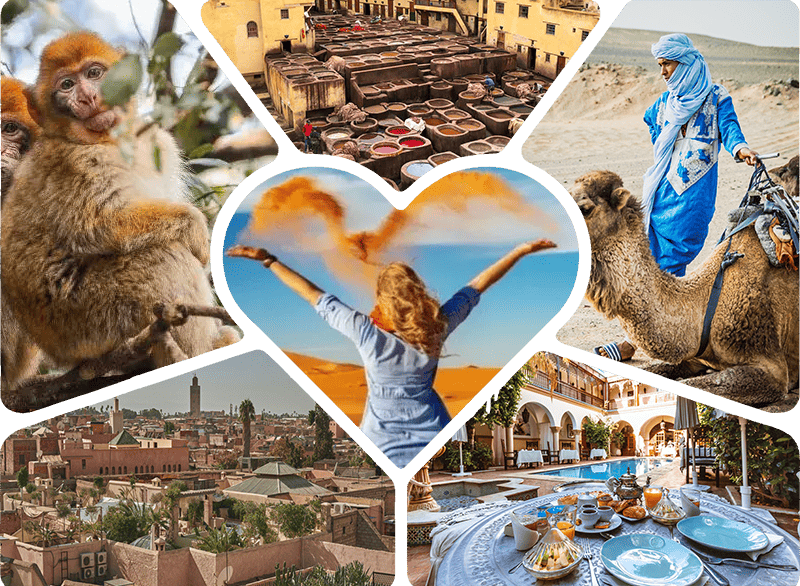
This is the day that distinguishes your four-day tour from shorter itineraries—a full day to explore the Merzouga region’s hidden treasures and experience the desert at different times and from different perspectives. The schedule remains flexible based on your interests and energy levels, but typically includes a combination of these experiences:
Sunrise Over the Dunes: Wake before dawn for an experience many travelers call their trip’s highlight. Walk or take a short camel ride to a high dune crest, arriving as the eastern horizon begins to lighten. Watch the sun rise over the Algerian desert beyond the dunes, its first rays transforming the sand from dark silhouettes to glowing sculptures. The low-angle morning light creates dramatic shadows that reveal every ripple and curve shaped by yesterday’s winds. The temperature shifts from night’s chill to pleasant warmth as the sun climbs, and the silence of the desert at dawn has a quality found nowhere else on Earth.
After sunrise, return to camp for breakfast before checking out. You’ll spend the day based from a hotel or riad in Merzouga village, using it as a base for various activities.
Visit to Khamlia Village: Drive to Khamlia, a small village about seven kilometers from Merzouga, home to descendants of sub-Saharan people brought north as part of the ancient trans-Saharan slave trade. The community has preserved their musical traditions, particularly Gnawa music—a hypnotic, spiritual musical form using distinctive instruments like the guembri (a three-stringed bass instrument) and metal castanets called qraqeb. Watch a performance in a family home, where the music’s repetitive rhythms and call-and-response vocals create trance-like states. Share tea with the musicians afterward, learning about their community’s unique position in Moroccan society and their efforts to preserve cultural heritage through music.
Nomad Family Visit: Journey into the desert landscape surrounding the dunes to visit a nomadic Berber family who continue traditional desert lifestyles. Sit in their low, hand-woven tent (called a khaima), drink tea prepared over a small fire, and gain insight into how these families navigate the challenges of modern life while maintaining connections to ancestral ways. You might see traditional bread baking in the sand, observe how families manage their goat or camel herds, and understand the profound knowledge required to thrive in such an unforgiving environment. These encounters, arranged respectfully with families who welcome visitors, provide cultural understanding impossible to gain from books or documentaries.
Seasonal Desert Lake: During certain times of year, particularly spring, shallow seasonal lakes form in the desert around Merzouga, attracting flamingos, herons, and other waterbirds. The surreal sight of pink flamingos wading in desert water with sand dunes as backdrop creates one of Morocco’s most unexpected wildlife experiences. Your driver monitors conditions and will include this stop if the lake holds water during your visit.
Fossil and Mineral Workshops: Visit workshops around Erfoud where artisans transform ancient fossils into decorative items and artwork. Watch craftsmen cutting and polishing 350-million-year-old trilobites, ammonites, and orthoceras fossils with remarkable precision, creating everything from small pendants to large decorative tables. The workshops also display spectacular mineral specimens—geodes filled with crystals, desert roses (sand formations that resemble flowers), and multicolored layers of sedimentary rock that record geological epochs.
Optional Activities (additional cost, arranged through your driver or hotel):
Afternoon Relaxation: Return to your accommodation for the hottest part of the day. Enjoy lunch, rest in air-conditioned comfort, take advantage of the pool if available, or simply relax on a rooftop terrace watching the dunes shimmer in the heat. This rest period follows the sensible North African tradition of avoiding peak heat hours, and it allows you to recharge before the evening.
Second Night in the Desert: As afternoon fades, begin your second camel trek into the dunes. Tonight’s experience carries different energy—you’re no longer a first-time visitor to the Sahara but someone returning to a place you’ve begun to understand. The route might differ from last night, showing you different dune formations and perspectives. Perhaps you’ll trek further, ride longer, or visit a different camp location.
This second night allows deeper connection with the desert. Conversations around the fire become more substantial, the music perhaps more participatory, and the experience of sleeping in the Sahara shifts from thrilling novelty to something approaching genuine comfort. You’ve learned where the brightest stars appear, how the temperature shifts as night progresses, and how to properly wrap a turban against wind-blown sand.
Meals included: Breakfast, Dinner
Accommodation: Luxury desert camp in Erg Chebbi with private ensuite tents (second night)
Activities: Flexible based on interests, with multiple cultural and adventure options
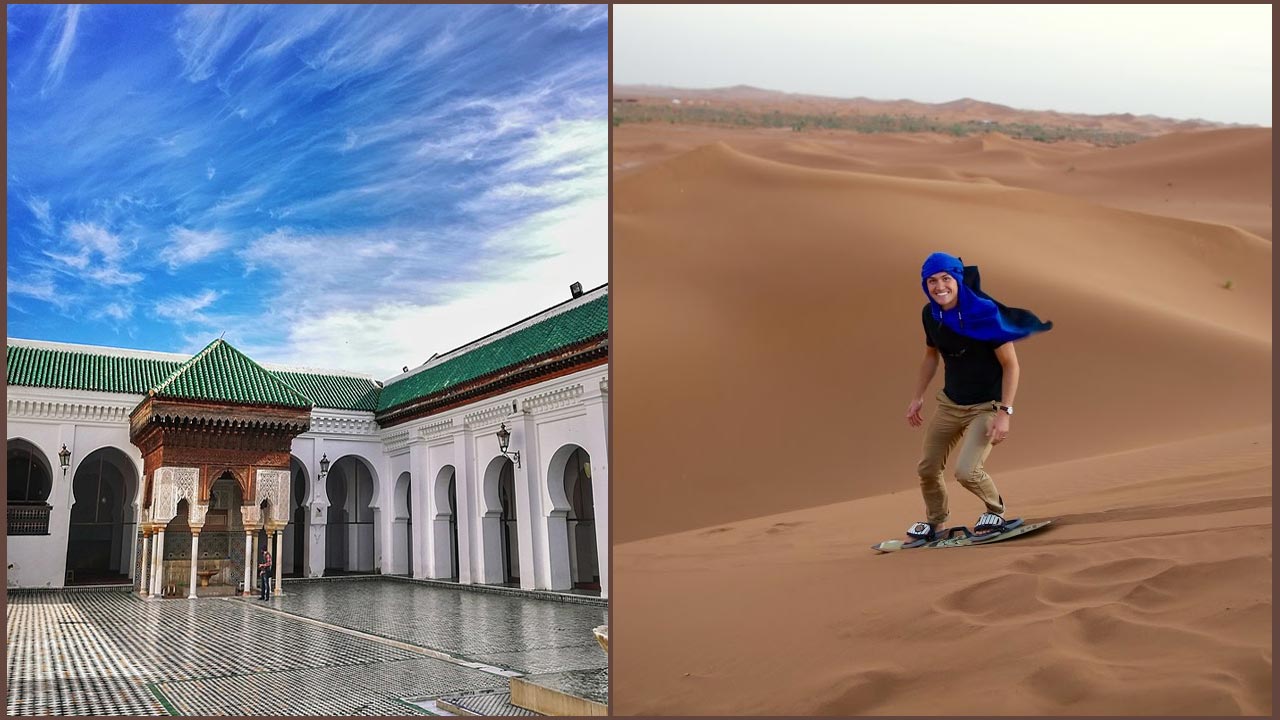
Wake early for your final Saharan sunrise—by now, you’ve developed a relationship with these dunes, and leaving carries bittersweet emotions. After sunrise and breakfast at the camp, ride your camel back to Merzouga for a shower and the long journey returning to Marrakech.
The return route follows different paths than your outbound journey, maximizing landscape variety and providing new perspectives on Morocco’s desert regions. Today involves substantial driving, but the route breaks up the distance with interesting stops and dramatically changing scenery.
Leave Merzouga behind, watching the dunes shrink in the rearview mirror, and drive through Rissani, an important historical town that once served as the capital of the Tafilalt region. The town’s traditional souk (market days are Sunday, Tuesday, and Thursday) operates much as it has for centuries—a covered labyrinth where locals trade livestock, produce, spices, and household goods with minimal tourist presence. If timing aligns with market day, stop to experience authentic Moroccan commerce far from the tourist-oriented souks of major cities.
Continue through increasingly varied terrain as you follow the ancient caravan route toward the Draa Valley. The landscape alternates between volcanic desert, palm oases, and gradually rising terrain as you approach the Anti-Atlas Mountains. The drive through these regions provides contemplative time—watching landscapes roll past, processing the experiences of the past days, and appreciating the distances that separate Morocco’s desert regions from its more populous northern cities.
Enter the Draa Valley, Morocco’s longest river valley and one of its most beautiful. A continuous ribbon of date palms and cultivation follows the Draa River for over 200 kilometers, creating a green corridor through otherwise arid terrain. The valley has supported agriculture for millennia—ancient kasbahs overlook palm groves, traditional irrigation systems channel water to terraced fields, and the economy still revolves around date harvests, with dozens of date varieties growing in the valley’s perfect conditions.
Stop in Agdz or Tamnougalt for lunch and to explore one of the valley’s well-preserved kasbahs. These fortified villages, built from packed earth and decorated with geometric patterns, represent traditional Berber architecture at its most refined. Walk through shadowy passages, climb to rooftop terraces offering valley views, and understand how these structures provided both homes and fortifications for communities facing periodic raids and tribal conflicts.
The afternoon journey continues through the Anti-Atlas Mountains, a lower but equally dramatic range south of the High Atlas. The landscape here carries a raw, austere beauty—red and purple rock formations, desert vegetation, and expansive views across valleys toward distant peaks. Pass through small Berber villages where life continues at a pace disconnected from Morocco’s urban centers.
Eventually rejoin the main route across the High Atlas via Tizi n’Tichka Pass. By now, this crossing feels familiar—you’ve learned to anticipate the curves, recognize landmark formations, and appreciate the dramatic transition from southern pre-Saharan regions to northern Atlantic-influenced climates. The descent toward Marrakech carries a sense of return to the world you temporarily left behind.
Arrive in Marrakech by early evening, typically between 6:00 and 7:00 PM depending on traffic and stops. Your driver delivers you directly to your riad or hotel, completing this extraordinary circuit through Morocco’s most iconic landscapes. You return with desert sand still in your shoes, hundreds of photographs in your camera, and memories that will last far longer than four days would suggest possible.
Meals included: Breakfast
Accommodation: Not included (tour ends upon arrival in Marrakech)
Driving distance: Approximately 560 kilometers (9-10 hours including stops and lunch break)
Note: The return journey involves significant driving time. Some travelers prefer to break this into two days with an overnight stop in Ouarzazate or the Dades Valley, extending the tour to five days total. This option can be discussed when booking.
Navigate the Tizi n’Tichka Pass at 2,260 meters elevation with breathtaking panoramas across Morocco’s mountainous spine and dramatic climate transitions.
Explore Morocco’s most famous fortified village, a stunning example of earthen architecture that’s appeared in over twenty major Hollywood films.
Journey through palm oases dotted with ancient clay fortresses, each telling stories of trade, tribal conflicts, and adaptation to harsh environments.
Experience the “Valley of Human Bodies” with its bizarre rock formations and navigate the famous serpent curves through towering limestone canyons.
Walk through one of Morocco’s most spectacular natural formations where 160-meter walls create a cathedral-like passage barely 10 meters wide at its base.
Unlike shorter tours, spend two complete nights in desert camps, allowing deep immersion in the Sahara’s rhythms, silence, and extraordinary night skies.
Four separate camel rides (two sunsets, two sunrises) provide different perspectives on the dunes and allow you to experience the desert at its most magical moments.
Explore Morocco’s most spectacular dunes rising up to 150 meters high with distinctive golden-orange sand that glows intensely at sunrise and sunset.
Experience the hypnotic spiritual music of Khamlia village, preserved by descendants of sub-Saharan people who traveled ancient trans-Saharan trade routes.
Share tea with Berber families maintaining traditional desert lifestyles, gaining insights into cultures adapted to one of Earth’s harshest environments.
Return through Morocco’s longest river valley, a continuous ribbon of date palms and cultivation creating a green corridor through desert terrain.
Visit rose cooperatives, fossil workshops, traditional markets, and Berber villages where life continues according to rhythms little changed over centuries.
Experience night skies of extraordinary clarity where the Milky Way dominates, planets shine brilliantly, and meteors streak past regularly.
Choose from options like visiting seasonal desert lakes with flamingos, exploring by quad bike, sandboarding down tall dunes, or simply contemplating the desert’s profound silence.
Pricing for this 4 days desert tour from Marrakech to Merzouga varies based on group size, season, accommodation choices, and specific requirements. Understanding the pricing structure helps you choose the option matching your budget and expectations.
Standard Group Tour (Join scheduled departure with other travelers, groups of 6-8 people): Expect pricing in the range of 210-260 euros per person. This economical option includes all transportation, standard accommodations, specified meals, and all activities described in the itinerary. You’ll share the vehicle with other international travelers, creating opportunities for friendship and shared experiences. Departures typically occur 2-3 times weekly during peak seasons, less frequently during slower months.
Private Standard Tour (Vehicle and guide exclusively for your group): Pricing scales significantly with group size. For two travelers, expect 380-450 euros per person. For four travelers, approximately 280-340 euros per person. For six or more travelers, around 230-280 euros per person. Private tours offer tremendous flexibility—depart any day you choose, adjust timing and stops within the itinerary framework, maintain privacy throughout the journey, and receive personalized attention from your driver-guide.
Private Luxury Tour (Premium vehicles, upgraded accommodations, enhanced services): For couples, pricing ranges from 550-650 euros per person. For four travelers, approximately 420-500 euros per person. Larger groups see per-person costs of 360-430 euros. Luxury upgrades include traveling in newer, more spacious 4×4 vehicles with extra legroom and comfort features, staying in premium four-star riads and superior luxury desert camps with enhanced amenities, enjoying upgraded meals with more variety and quality, and having both a driver and a professional English-speaking guide providing deeper cultural and historical context.
Five-Day Extended Version (Breaking the return journey with overnight in Ouarzazate or Dades): Many travelers find the
final day’s long drive from Merzouga back to Marrakech tiring and prefer splitting it across two days. This five-day version adds approximately 80-120 euros per person (depending on group size) and includes an additional night’s accommodation, breakfast, and dinner. The extra day allows more leisurely exploration of the Draa Valley, time to visit Ouarzazate’s film studios in detail, and arrival in Marrakech feeling refreshed rather than road-weary.
Seasonal Price Variations: Peak season (October-November and March-April) typically commands prices at the higher end of these ranges due to optimal weather and increased demand. Mid-season (September, December-February, May) offers moderate pricing. Summer months (June-August) sometimes feature discounted rates despite the intense heat, as many travelers avoid desert regions during this period.
Single Traveler Considerations: Solo travelers joining group tours pay the standard per-person rate. Solo travelers booking private tours face single supplements since costs are divided among fewer people. However, solo travelers can sometimes be matched with others seeking to share costs—inquire about this possibility when booking.
What Influences Final Pricing: Your final quote depends on specific travel dates (holiday periods cost more), exact group size (larger groups achieve better per-person rates), accommodation standard preferences (some travelers want the best available desert camps), special requests (dietary requirements, mobility accommodations, specific activities), and current fuel costs (significant price fluctuations can affect tour operators’ base costs).
Payment Structures: Most reputable operators require a deposit (typically 20-30% of total cost) to secure your booking, with the balance due either before departure or in some cases upon meeting your driver. Accepted payment methods usually include bank transfers, PayPal, credit cards (sometimes with small processing fees), and cash upon arrival for the balance.
Best Value Recommendation: Groups of four to six travelers booking private standard tours achieve excellent value—you enjoy privacy, flexibility, and personalized service while keeping per-person costs reasonable. The two extra nights compared to three-day tours represent money well spent, as they transform a rushed desert glimpse into genuine immersion.
For travelers whose primary Morocco goal is experiencing the Sahara Desert deeply rather than rushing through multiple cities. Two nights in the dunes allow genuine immersion in desert landscapes, culture, and atmosphere.
The two nights in Merzouga provide multiple opportunities to capture the dunes in different light conditions—sunset, blue hour, starry nights, sunrise, and daytime.
The intimate desert camp experience, starlit dinners, private moments atop dunes at sunrise, and shared adventure create natural romance. The extended time allows couples to disconnect from routine and reconnect with each other in extraordinary settings.
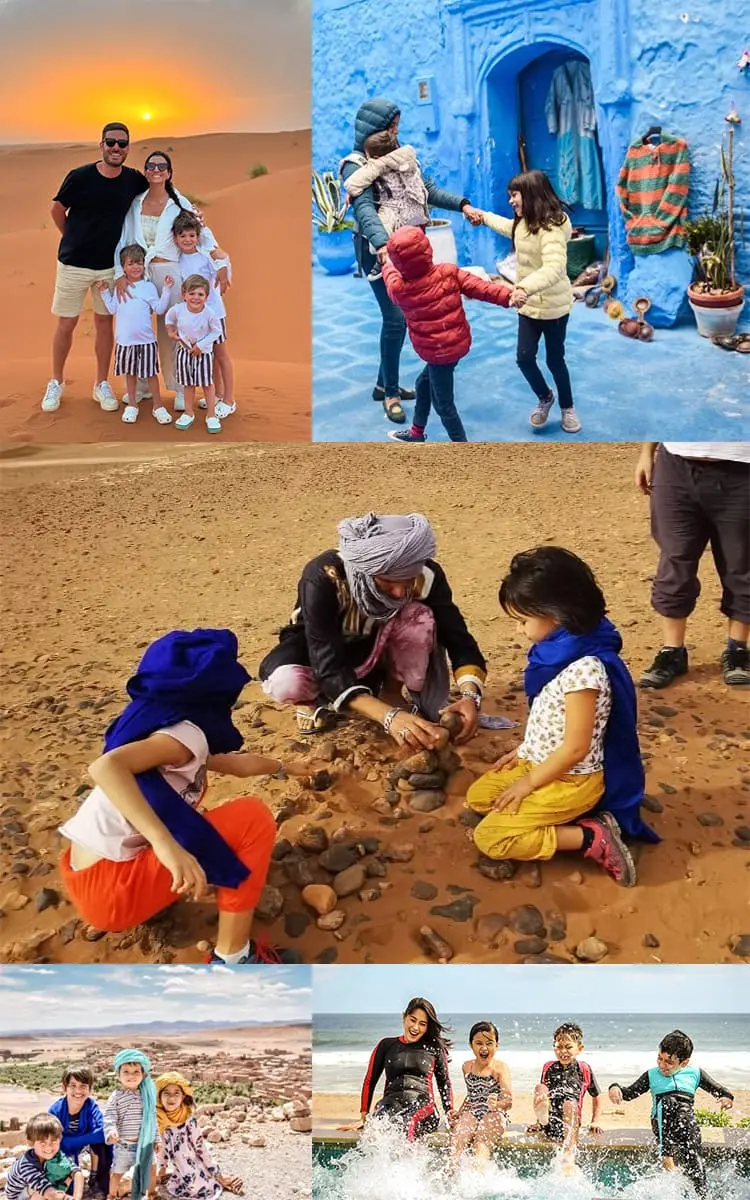
Older children and teenagers typically love the adventure aspects—camel trekking, exploring gorges, meeting nomadic families, music performances, and the novelty of sleeping in desert camps. The four-day duration maintains interest without overwhelming younger travelers.
Group tours bring together international travelers sharing desert experiences, camel treks, campfire evenings, and music performances. Solo travelers often form lasting friendships during these shared adventures.
This tour combines genuine adventure—remote desert camping, camel trekking, gorge exploration—with comfortable accommodations featuring real beds, private bathrooms, and quality meals. You can embrace adventure without sacrificing all comfort.
Login to use
Location
Duration
Embark on a breathtaking 3-day journey through Morocco’s...
Login to use
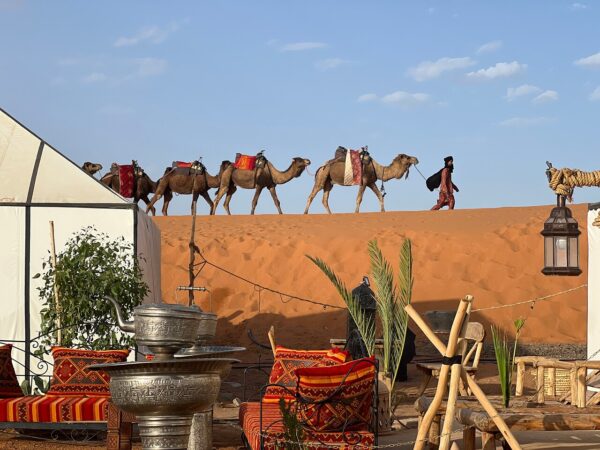
Location
Duration
Travel from Marrakech to Fes on a 3-day...
Login to use
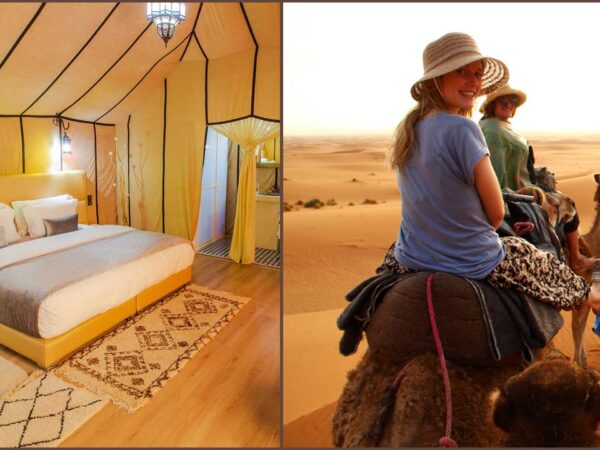
Location
Duration
Join our 3-day shared desert tour from Marrakech...
Login to use
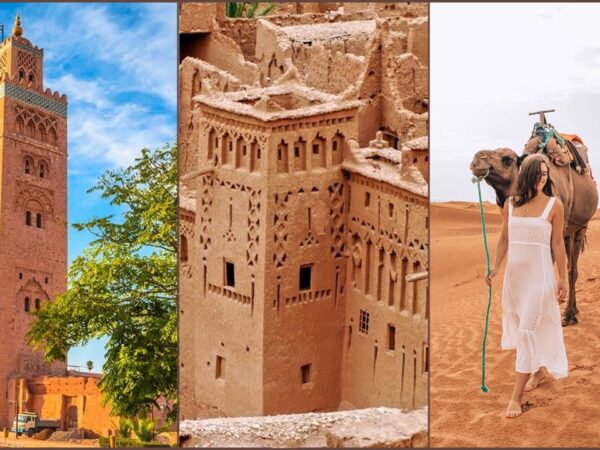
Location
Duration
Join our 4-day shared trip from Marrakech to...
Request a Personalized Quote – Get exact pricing for your specific travel dates, group size, and preferences or reach out for a personalized quote via WhatsApp.
Your driver-guides aren't seasonal employees trained from manuals—they're from these regions, many from Berber families who've lived in desert areas for generations. They speak Tamazight (Berber languages), maintain family connections in villages along the route, and understand desert culture from the inside rather than as observers. This insider knowledge transforms your tour from simple transportation between locations into genuine cultural exchange.
Over years of operating these tours, professional operators develop relationships with the best family-run accommodations, most authentic cooperatives, and most welcoming nomadic families. You're not arriving as anonymous tourists but as guests of someone known and trusted in these communities, which dramatically changes how you're received and what experiences become possible.
Desert travel involves inherent risks—extreme temperatures, remote locations, challenging roads, and medical facilities hours away. Experienced operators maintain vehicles to rigorous standards, carry emergency equipment and supplies, communicate your location to their offices, maintain insurance covering various scenarios, and most importantly, possess the judgment developed over hundreds of desert trips to make safe decisions when weather, roads, or other factors change.
Many booking platforms show photos of luxury camps when clients actually receive basic facilities. Established operators provide accurate descriptions and photos of actual accommodations you'll use, managing expectations honestly rather than setting up disappointment. If you're paying for "luxury" camps, you receive private bathrooms, comfortable beds, and quality amenities—not shared facilities and thin mattresses.


500+ reviews
Posted on TripadvisorVerified Mehdi the best driver Very good tour with Mehdi. He stopped in nice places so we could take pictures and did additional things that were not included in the tour for our enjoyment.Posted on TripadvisorVerified Must do tour !! Fantastic itinerary, fitting so much into 3 days. Todra Gorge & Sahara were the highlights, and Ayoub B was a great driver.Posted on TripadvisorVerified An Unforgettable Tour Led with Heart and Professionalism My experience on this tour was truly exceptional. Every detail was handled with care, and nothing was overlooked. Idris and Ngassa anticipated needs before they even arose and consistently ensured our safety and comfort.Their dedication felt like more than just a job — it felt like a true calling. They kept our group organized while still giving us the freedom to be ourselves. The pacing of each activity was perfect: engaging, well-balanced, and never overwhelming.The desert experience was absolutely phenomenal. The clear skies and beautiful weather made it unforgettable.I highly recommend this tour. Anyone who joins will not be disappointed.Posted on TripadvisorVerified Desert trip Ismael a great guide, friendly and attentive. Makes a good team with the driver too. An interesting experience for first time desert goers.Posted on TripadvisorVerified A great alternative route to Fez from Marrakech Ismail was a great tour guide. Stops on the road were well spread out and interesting. We were kept informed of the plan everyday and he made sure everyone was comfortable and got what they needed. It's a lot of time in the car (to be expected) and it was cold in the desert in December so plan accordingly!Posted on TripadvisorVerified Desert tour with great guides Yousef is the best super fun and knowledgeable he made the tour so special we had so much fun with him he was the life of the party and everything went well because of him and Jafar jafar os the best driver in Morocco this was my favourite experience here you have to do it !Posted on TripadvisorVerified Sahara in Style I had the most amazing Sahara trip with Morocco Tour! The guide, Moha, and the driver, Jaafar were great and treated me and everybody else on my tour like family. The stops made along the way towards the desert were led by local guides and were well thought out. The desert camp was the highlight of the trip, starting with arriving by camel. The tents were clean and modern, and had electricity along with hot water. Along with these amenities, there were other activities such as sand boarding and a sunrise atv ride. 10/10 would recommend to anybody who wants to see the Sahara and values excellent hospitality.
Absolutely. The camel trek is designed for travelers of all experience levels, including first-timers. The journey into the desert takes approximately one to one and a half hours at a gentle walking pace. Your camel is led by experienced handlers, and you’ll receive basic instructions before mounting. The camels are well-trained and accustomed to carrying tourists. If you have mobility concerns or back problems, inform your driver in advance—alternative transportation to the camp can be arranged.
Pack layers since temperatures vary dramatically between desert heat, mountain coolness, and chilly desert nights. Essential items include comfortable walking shoes, sunscreen and sunglasses, a warm jacket or fleece for evenings, a scarf or hat for sun protection, personal toiletries, any necessary medications, a flashlight or headlamp, and a camera with extra batteries. A small day pack for items you’ll want during stops is useful. The desert camp provides bedding, so you don’t need a sleeping bag. Modest clothing is respectful—covering shoulders and knees is appreciated when visiting villages.
Yes, private tours offer significant flexibility. If you want to spend more time at specific locations, add stops at particular sites, adjust departure times, or accommodate special interests like photography or bird watching, just communicate your preferences when booking. While the basic route structure remains consistent due to logical overnight stopping points, many aspects can be personalized. The shared group tour follows a fixed itinerary with less flexibility for changes.
The luxury desert camps provide surprisingly comfortable accommodations considering the remote location. Expect spacious tents with real beds (not sleeping bags on the ground), quality mattresses and linens, private bathroom facilities with toilet and shower, electricity for charging devices (often solar-powered), and traditional Berber decoration creating authentic atmosphere. The communal dining tent serves hot meals, and staff prepare mint tea and facilitate evening entertainment. “Luxury” in this context means private ensuite facilities and comfortable beds rather than five-star hotel amenities—you’re still in the Sahara Desert, which is part of the magic.
The tour involves some walking, including uneven surfaces at kasbahs and gorges, plus getting on and off camels. However, many travelers in their 60s and 70s complete this journey comfortably. The key is honest assessment of your mobility and communicating any limitations to your tour operator. Most locations offer vehicle access close to viewing points, camel riding can be replaced with 4×4 transport to the camp, and private tours can adjust the pace. Specific mobility concerns should be discussed when booking so appropriate accommodations can be arranged.
Morocco’s desert regions enjoy excellent weather most of the year. Summer (June-August) brings intense heat but clear skies. Winter (December-February) offers pleasant daytime temperatures but cold nights. Spring and fall provide ideal conditions. Rain is rare but possible, particularly in mountain areas during winter and spring. Your driver monitors conditions and will adjust routes if necessary for safety. The Sahara experience continues in most weather—even overcast skies create dramatic photography conditions, and light rain doesn’t prevent the journey.
Moroccan cuisine offers excellent vegetarian options including vegetable tagines, couscous with vegetables, salads, and fresh bread. When booking, inform the tour operator of any dietary requirements—vegetarian, vegan, gluten-free, allergies, or religious dietary laws. Hotels and camps prepare meals to accommodate restrictions when notified in advance. Lunch stops at restaurants offer menu choices where you can select according to your preferences. The more specific information you provide when booking, the better your meals can be tailored to your needs.
Budget approximately 10-15 euros per person per day for lunches at local restaurants. Monument and kasbah entrance fees total around 15-20 euros per person for the entire tour. Bottled water, snacks, and beverages might add another 10-15 euros. Souvenirs and personal purchases vary by individual—handicrafts range from a few euros for small items to hundreds for quality carpets or artwork. Tipping is customary in Morocco—budget 40-60 euros total for your driver, local guides, and camp staff if you’re satisfied with services. Overall, 100-150 euros per person covers all typical expenses beyond the tour price.
Yes, spending an additional night in Merzouga is possible with advance arrangement. This allows more time for desert activities like quad biking, visiting nomadic families, exploring desert oases, or simply experiencing more sunrises and sunsets over the dunes. The itinerary would be adjusted to include two nights near Merzouga instead of one. This extension adds to the overall tour duration and cost but significantly deepens your Sahara experience. Contact your tour operator when booking to discuss this option.
The point-to-point route from Marrakech to Fes eliminates backtracking, meaning you see different landscapes each day rather than retracing the same roads. You maximize your time experiencing new places instead of covering already-seen territory. Additionally, ending in Fes—one of Morocco’s most culturally rich cities—positions you perfectly to explore the medina, artisan quarters, and tanneries. This routing is more time-efficient for travelers planning to visit both cities anyway, and the gradual transition from southern desert regions to northern mountain forests showcases Morocco’s dramatic geographical diversity more effectively than any round-trip route.
WhatsApp us